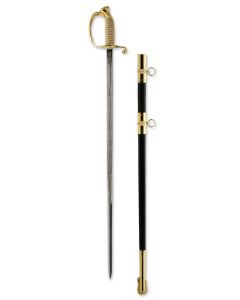
Definition of Sword vs. Saber:
The
dictionary defines a sword as a weapon consisting typically of a long, often
straight or slightly curved, pointed blade, having one or two cutting edges, that
is designed for thrusting or cutting. The
same dictionary defines a saber as a heavy cavalry sword with a slightly
curved blade, sharpened on one side, with a thick back edge and a hand guard. If
you really want to make your hair hurt from thought, try to figure out the difference
between a saber and a sabre!
| |  | Army Officer: Saber or Sword?
The
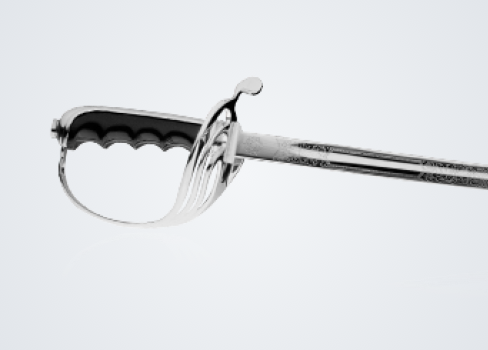
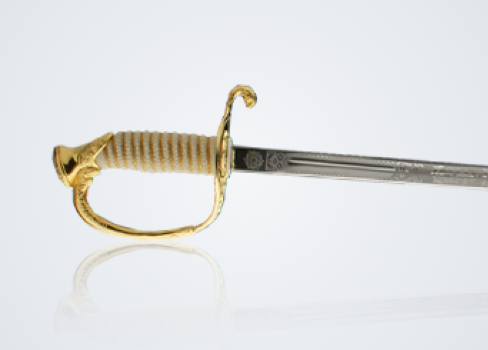
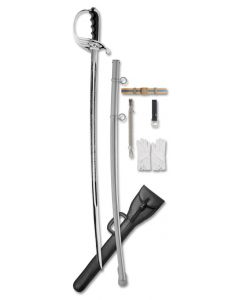
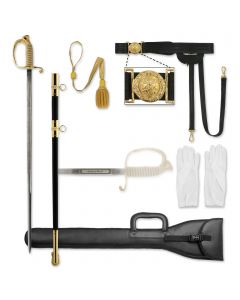
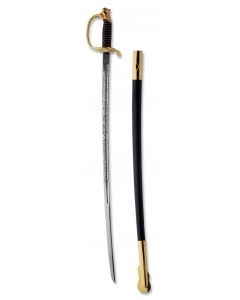
US Army Officer Saber was worn by the US Cavalry and has the slightly curved
blade, so it is traditionally called a saber. Today's saber, however, is not strictly
worn by cavalry officers, but can be worn by all officers except those who do
not bear arms (e.g., chaplains). In fact, the current Field Manual 3-21.5, Drill
and Ceremonies, states that The nomenclature for the saber is saber for all officers, model 1902. (Appendix F).
On
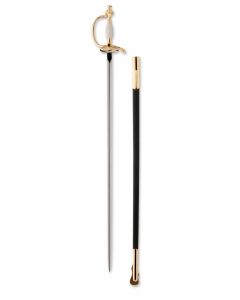
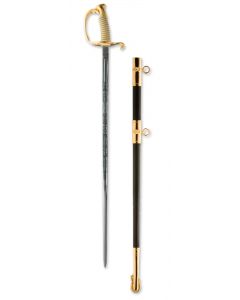
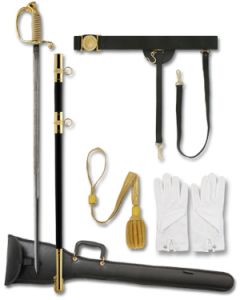
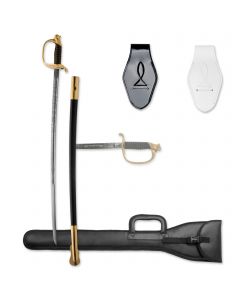
the other hand, the straight-blade pieces are swords the Army
NCO Sword, the Navy Officer Sword, the
Air Force Sword, and the Coast
Guard Officer Sword. |
 | Marine Officer: Saber or Sword?
For
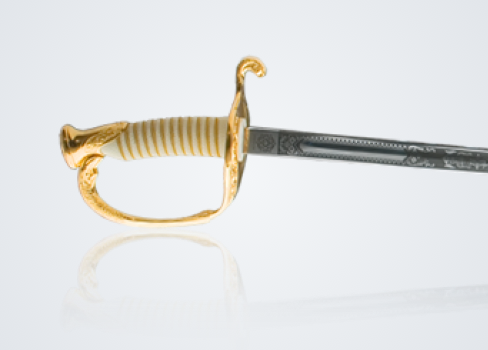
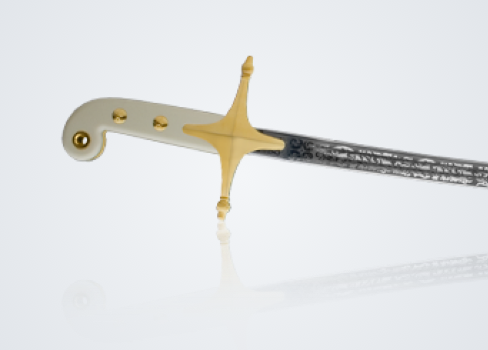
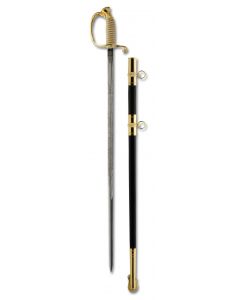
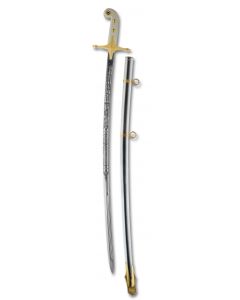
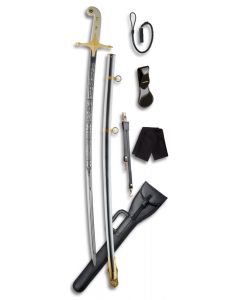
our traditional Army customer, the US Marine Corps reference to their swords can
be confusing to the Army mind. The Marine Corps Uniform Regulations (MCO P1020.34F)
prescribe both the Marine Corps Officer Sword
and the Marine Corps NCO Sword. Both pieces
are curved. The traditional Army mind set tempts a Soldier to call them both Marine
Corps Sabers, but we guess that the Marine Corps does not have a lot of horseback
in their rich history. Furthermore, in the case of the Marine Corps Officer Sword,
the sword has no hand guard.
| | 
| West Point: Saber or Sword?
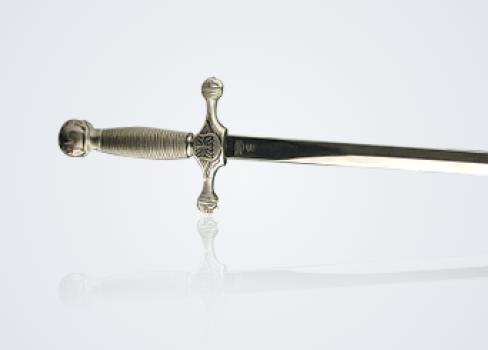
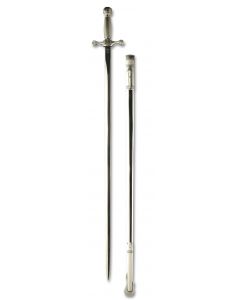
Why do cadets often refer to their swords as a "West Point Saber"? Obviously, the West Point sword is just that
a sword with an edge on each side of the blade (see definition above). The confusion arises because the Army's FM 3-21.5, Drill & Ceremonies, refers to sabers for officers. We believe West Point adopted the same manual of arms commands for its "swords"; for example, "Officers, draw, sabers", when executing manual of arms with their "West Point Sabers". |